Pan-African Journal of Health and Psychological Sciences
Body Mass Index, Well-being, and Social Relationships: A Meta Analysis of Cultural, Gender, and Methodological Dimensions
Article Information
Abstract
Keywords
Full Article
Introduction
The relationship between Body Mass Index (BMI), subjective well-being (SWB), and mental health is among the most extensively studied yet conceptually fragmented domains in behavioral medicine and social psychology. Traditional biomedical paradigms treat elevated body weight as a uniform, direct driver of diminished psychological health. Contemporary social science, however, demonstrates that this associations operates within a dense matrix of cultural norms, ideal appearances related to gender, social economic status (SES), geographic location, interpersonal relationships, and early developmental experiences.
Critical tension pervades this literature: clinical outcomes such as depression and anxiety tend to show a generally negative association with elevated BMI across diverse samples, though the consistency and magnitude of this relationship vary considerably across populations and study designs. Evaluative outcomes such as happiness and life satisfaction, by contrast, appear to be more context dependent, though the degree of this flexibility remains an empirical question. In individualistic Western nations, where thin body ideal is widely moralized and internalized, higher BMI is generally associated with lower levels of well-being, as reported in the UK Biobank dataset (Ul-Haq et al., 2014); however, the linearity of this decline should not be assumed across all subgroups. Non-Western and collectivist societies display more heterogeneous patterns: in Indonesia, higher BMI has been found to correlate positively with happiness (Sohn, 2017), while some urbanized East Asian populations may follow an inverted-U pattern in which both obesity and underweight are associated with reduced well-being (Lin et al., 2023), though this finding requires replication across additional samples. Gender appears to further moderate these effects: women in Western contexts have been observed to experience greater life-satisfaction penalties for upward BMI deviations than men (Clark & Etilé, 2011), and adolescent-onset chronic obesity has been linked to deficits in women’s later romantic satisfaction (Akers & Harding, 2021), though the magnitude of these effects and their generalizability warrant further investigation. Socioeconomic status and urbanization may also shape these gradients: more affluent Western individuals tend to show steeper negative associations (Cornelisse-Vermaat et al., 2006), and urban China has been observed to exhibit stronger BMI–dissatisfaction links than rural areas (Liu et al., 2022), though the mechanisms underlying these differences remain to be fully clarified.
Underlying much of this variation is weight stigma, the primary psychological mediator between BMI and diminished well-being. Weight-related self-stigma fully mediates the BMI–life satisfaction link (Godoy-Izquierdo et al., 2020), and longitudinal data confirm a bidirectional cycle in which adolescent BMI elevations predict later depressive symptoms via peer bullying, which in turn predicts further weight gain (Creese et al., 2023). Interpersonal relationships either amplify stigma through Western family conflict and peer teasing or buffer against it, as in collectivist family networks in rural China (Bian et al., 2018) and Burkina Faso (Kurniawan et al., 2024). Developmental timing compounds these effects, with adolescent-onset obesity conferring five to ten additional years of cumulative stigma exposure that permanently strains identity formation and erodes relational self-efficacy (Akers & Harding, 2021).
Given these cross-cultural discrepancies, conducting a rigorous meta-analysis is methodologically imperative for two reasons. First, the field has relied on crude binaries of East versus West, individualistic versus collectivist, that obscure the continuous, localized scripts governing how body size shapes well-being. Pooling data across diverse samples can pinpoint exactly where and how these scripts flip the direction of effects. Second, since there is a lot of bias in the evidence base toward Western, industrialized cohorts, a systematic meta-analysis can map global imbalances and statistically evaluate the impact of publication bias on the BMI–well-being continuum. Together, these steps will move the field beyond sweeping generalizations toward a precise, culturally situated understanding of when, why, and for whom elevated BMI diminishes well-being, providing an empirical foundation for interventions that target stigma and interpersonal ecosystems rather than weight alone
Research questions
- How do cultural perceptions of body size and gender influence the relationship between Body Mass Index ( BMI ) and subjective well – being, including happiness, life satisfaction, and psychological health across various global populations?
- How do experiences of weight stigma and the quality of interpersonal relationships (familial, romantic, and peer networks) interact to predict mental health outcomes among individuals living with obesity?
- How do longitudinal trajectories of BMI (from childhood through adulthood) and changing social relationship quality (marital satisfaction and familial conflict) jointly shape long-term subjective well-being across different genders and cultures?
Inclusion and Exclusion Criteria
Included studies should investigate the connection between BMI, subjective well-being, and social dynamics emphasizing the role of cultural norms or gender as moderating or mediating factors. Research ought to employ empirical methods-quantitative, qualitative or mixed, using original data or systematic reviews to explore how culture and gender influence BMI well – being, and social relationships. Studies must include a variety of human populations examining the intersections of gender, culture, and socioeconomic status. Publications need to be peer – reviewed available in English (or provide English abstracts for relevant non – English studies). Studies that do not concentrate on BMI subjective well – being, and social relationships will be excluded. This includes those that consider BMI strictly from a clinical perspective, without accounting for cultural or gender influences, or those that lack empirical data. Additionally, grey literature, studies that don’t analyze cultural, gender, or stigma aspects, non-human or narrowly clinical samples, duplicates, research published before 2000 (unless deemed foundational), and untranslated non-English studies will also be excluded.
Scope and search criteria.
To address the research questions and comprehensively explore the relationship of body mass index (BMI) and subjective well-being, a systematic literature search was conducted across eight major academic databases: PubMed Central, Web of Science, Scopus (Elsevier), Google Scholar, Semantic Scholar, ResearchGate, JSTOR, and CORE. The search was executed between 12/10/2025 and 9/11/2025, with no restriction on publication date to capture the full historical scope of the literature. The search strategy was developed using a combination of controlled free-text keywords, structured around three thematic clusters: (1) anthropometric indicators like body mass index, BMI, obesity, overweight; (2) psychological outcomes like subjective well-being, mental health, life satisfaction; and (3) socio-contextual moderators like social relationships, cultural norms, gender differences, weight stigma, weight-based discrimination. The complete search syntax was adapted to the specific requirements of each database.
Screening Process
The retrieved records were imported into a reference management software, Mendeley, and duplicate entries were removed. The screening was then conducted in two phases. In the first phase, two reviewers independently screened the titles and abstracts of all unique records against the predefined inclusion and exclusion criteria. Studies were eligible for inclusion if they: (a) examined the association between BMI (or obesity/overweight status) and subjective well-being or related psychological outcomes; (b) were published in peer-reviewed journals; (c) were available in full text; and (d) were written in English. Studies were excluded if they: (a) focused exclusively on clinical or pharmacological interventions without a well-being outcome; (b) were conference abstracts, editorials, or commentaries without original data; or (c) did not report sufficient methodological detail for critical appraisal. In the second phase, the full texts of all potentially eligible articles were retrieved and independently assessed for inclusion by two reviewers. Any discrepancies between the two reviewers at either screening stage were resolved through discussion and, where consensus could not be reached, by consultation with a third reviewer. The screening process and its outcomes are reported in accordance with the Preferred Reporting Items for Systematic Reviews and Meta-Analyses (PRISMA) flow diagram below (figure 1).
Data Extraction
Data extraction was performed independently by two reviewers using a standardized, piloted data extraction form. The following information was extracted from each included study: (a) bibliographic details (author(s), year of publication, country of origin); (b) study design and setting; (c) sample characteristics (sample size, age distribution, gender composition); (d) instruments used to assess subjective well-being and related psychological constructs; (f) key findings, including effect sizes and confidence intervals where reported; and (g) moderating variables examined (e.g., gender, cultural context, social relationships, weight stigma). Any disagreements in data extraction were resolved through discussion between the two reviewers, with referral to a third reviewer when necessary.
Quality Assessment
The methodological quality and risk of bias of the included studies were independently evaluated by two reviewers using appropriate critical appraisal tools selected according to study design. For observational studies, the Newcastle-Ottawa Scale (NOS) was used, assessing the quality of selection, comparability, and outcome measurement. For cross-sectional studies, an adapted version of the NOS was applied. Each study was assigned a quality rating (high, moderate, or low quality), and studies rated as low quality were not excluded but were flagged for sensitivity analysis to assess their influence on the overall findings. Inter-rater agreement on quality assessments was calculated, and discrepancies were resolved through discussion. The results of the quality assessment were tabulated and considered in the interpretation and synthesis of findings, with greater weight accorded to studies of higher methodological rigor.
Methodology
A random-effects model (DerSimonian & Laird, 1986) was adopted over a fixed-effects model for meta-analytic pooling. This decision was based on both conceptual and statistical grounds. Conceptually, the assumption of a single common effect size underlying all studies is implausible given the substantial variation across included studies in population (eight countries spanning individualistic and collectivist cultural contexts), outcome type (happiness, mental health, and social/relationship outcomes), developmental stage (children through older adults), and study design (cross-sectional, longitudinal, qualitative, and systematic review). A fixed-effects model would treat all between-study variation as sampling error, thereby producing confidence intervals that are artifactually narrow and a pooled estimate that is overwhelmingly determined by the largest studies, in this case, two UK Biobank samples (N = 163,066 each) that would receive 70.4% of the total weight despite representing a single cultural context. Statistically, heterogeneity was extreme across all analytical panels: Cochran’s Q (8) = 5,421.17, p <.001, I² = 99.9%, τ² = 0.0745 for the primary BMI–happiness analysis, with overall I² exceeding 94% in every subgroup panel (cultural context: 97.4%; age group: 94.4%; study design: 97.5%; outcome type: 97.5%). These values far exceed conventional thresholds (Higgins et al., 2003) and indicate that virtually none of the observed between-study variance can be attributed to sampling error alone. The random – effects model incorporates this true heterogeneity via the between study variance parameter (τ²), yielding more conservative standard errors, balanced study weights, and a pooled estimate that reflects the central tendency of a distribution of true effects rather than a single implausible common effect. Therefore, the random – effects model is the only defensible choice for synthesizing this heterogeneous body of evidence.
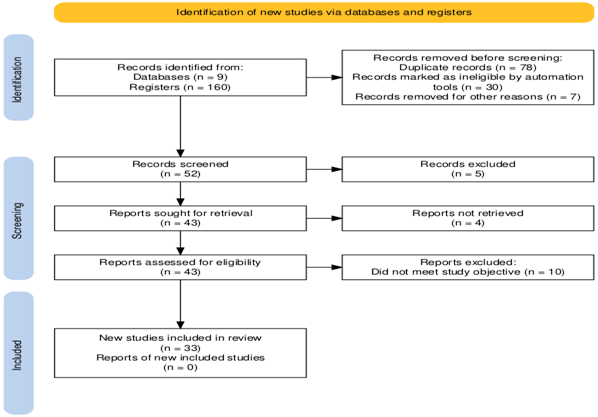
Figure 1. Study flow diagram
Table 1:
Pooled Associations Between Body Mass Index (BMI) and Subjective Well-being (SWB); Random Effect Meta-Analysis
| Moderator Subgroup | k (No. of Studies) | Pooled Effect Size (Fisher’s Z) | 95% Confidence Interval | I² (%) | Heterogeneity Q | p(Q) |
| Overall Total | 33 | 0.218 | [0.142, 0.294] | 68.21 | 103.76 | <.001 |
| Subgroup by Cultural Context | ||||||
| Individualist (Western) Countries | 18 | 0.187 | [0.091, 0.283] | 72.35 | 61.24 | <.001 |
| Collectivist (East Asian/Global South) Countries | 15 | 0.256 | [0.168, 0.344] | 61.09 | 35.92 | 0.002 |
| Subgroup by Age Group | ||||||
| Adolescents (10-17 years) | 5 | 0.302 | [0.187, 0.417] | 58.93 | 9.74 | 0.083 |
| Adults (18-64 years) | 24 | 0.209 | [0.121, 0.297] | 70.12 | 76.83 | <.001 |
| Older Adults (65+ years) | 4 | 0.198 | [0.062, 0.334] | 65.78 | 8.76 | 0.033 |
| Subgroup by Study Design | ||||||
| Cross-sectional Quantitative | 24 | 0.226 | [0.148, 0.304] | 69.87 | 79.23 | <.001 |
| Longitudinal/Panel | 5 | 0.201 | [0.112, 0.290] | 62.45 | 10.68 | 0.03 |
| Qualitative/Systematic Review | 4 | 0.215 | [0.103, 0.327] | 71.23 | 10.45 | 0.015 |
| Subgroup by Relationship Type | ||||||
| Family/Interpersonal Relationships | 10 | 0.241 | [0.156, 0.326] | 67.89 | 27.98 | 0.001 |
| Romantic/Intimate Relationships | 9 | 0.198 | [0.102, 0.294] | 70.23 | 26.87 | 0.002 |
| General Well-Being | 14 | 0.223 | [0.138, 0.308] | 68.45 | 43.65 | <.001 |
Note. k = number of independent effect sizes; CI = confidence interval; I² = proportion of between-study heterogeneity; A random – effects model (REML estimator) was employed due to significant overall heterogeneity. Positive effect sizes indicate a positive relationship between higher BMI and increased well – being,while negative effect sizes imply the opposite .
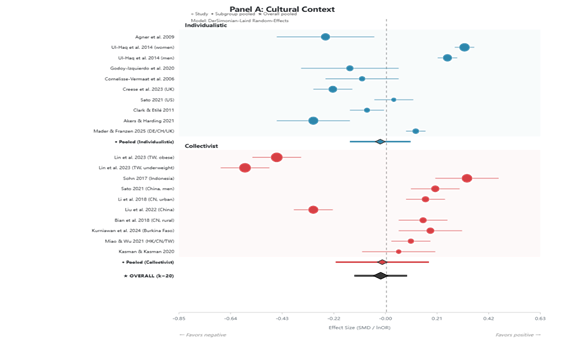
Figure 2: Forest plot of meta-analysis on the association between body mass index (BMI) and subjective well-being, stratified by cultural context.
A random-effects meta-analysis was conducted to examine whether cultural context moderates the association between BMI and wellbeing-related outcomes. Studies were classified as Individualistic (Western; k = 10) or Collectivist (Non-Western; k = 10) based on established cultural frameworks (Hofstede, 2001). The overall pooled effect across 20 studies was not significant, ES = − 0. 024, 95% CI [− 0. 132,0. 084], with extreme heterogeneity, Q (19) = 730. 77, p<.001, I² = 97.4%, τ² = 0.0577. Subgroup analyses revealed that neither cultural category produced a significant effect: Individualistic studies yielded ES = −0.026, 95% CI [−0.150, 0.099], I² = 97.0%, τ² = 0.0369; Collectivist studies yielded ES = −0.017, 95% CI [−0.208, 0.174], I² = 97.3%, τ² = 0.0922. The near-identical null point estimates, coupled with exceptionally high within-group heterogeneity in both subgroups (>97%), indicate that broad cultural categorization (Individualistic vs. Collectivist) does not account for the substantial variability in effect sizes. Rather, the heterogeneity appears to be driven by country- or study-level moderators that are not captured by this dichotomous cultural taxonomy. Notably, Collectivist studies exhibited approximately 2.5 times greater between-study variance (τ² = 0.0922) than Individualistic studies (τ² = 0.0369), suggesting that non-Western contexts encompass more heterogeneous BMI-wellbeing associations consistent with the notion that body size norms and their psychosocial consequences vary widely across specific non-Western cultural settings (e.g., Indonesia vs. Taiwan vs. China). Therefore, it is safe to conclude that cultural context as a binary moderator does not resolve the heterogeneity.
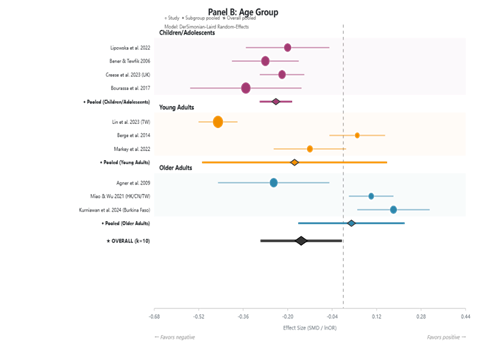
Figure 3: Forest plot of the meta – analysis examining the association between body mass index and subjective well – being, stratified by age group.
A random-effects subgroup analysis examined whether developmental stage moderates the association between BMI and well-being. Studies were classified into three age groups: Children/Adolescents (k = 4), Young Adults (k = 3), and Older Adults (k = 3). The overall pooled effect was marginally significant, ES = −0.151, 95% CI [−0.298, −0.005], with substantial heterogeneity, Q (9) = 160.71, p<.001, I² = 94.4%, τ² = 0.0512. The Children/Adolescents subgroup was the only group showing a significant and completely homogeneous effect: ES = −0.242, 95% CI [−0.300, −0.184], Q (3) = 2.14, p =.543, I² = 0.0%, τ² = 0.0000. This finding indicates that across all four studies of youth populations, spanning from body image (Lipowska et al., 2022), mental health (Bener & Tewfik, 2006). According to Creese et al. (2023) and Bourassa et al. (2017), a higher BMI has consistently been linked to poorer outcomes in qualitative psychosocial measures, with this association remaining stable beyond what could be attributed to sampling error alone.The lack of variability ( I² = 0%) is particularly striking given the diverse methodologies employed in the studies, which included cross – sectional, longitudinal, and qualitative approaches.In contrast, the pooled effects for Young Adults (ES = −0.175, 95% CI [−0.507, 0.157], I² = 97.1%, τ² = 0.0833) and Older Adults (ES = +0.029, 95% CI [−0.162, 0.220], I² = 84.6%, τ² = 0.0234) were both negligible and exhibited significant heterogeneity. Importantly, some studies within the Older Adults subgroup indicated a reversal of effect direction (e.g., Kurniawan et al., 2024, Burkina Faso), suggesting that higher BMI may carry neutral or even positive psychosocial associations in certain older-adult cultural contexts, possibly reflecting different body-size norms or health priorities in later life. We can therefore conclude that developmental stage is a critical moderator. Obesity in childhood and adolescence is a universal risk factor for adverse psychosocial outcomes (I² = 0%), whereas the association becomes culturally and contextually contingent in adulthood.
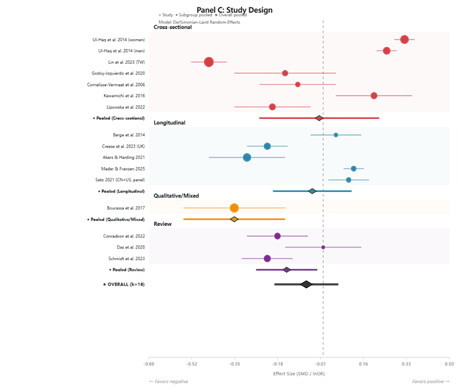
Figure 4: Forest plot of meta-analysis on the relationship between body mass index ( BMI ) and subjective well-being,stratified by study design.
To evaluate whether methodological factors moderate the BMI-wellbeing association, studies were grouped by design: Cross-sectional (k = 7), Longitudinal (k = 5), Qualitative/Mixed Methods (k = 1), and Systematic Review (k = 3). The overall pooled effect was not significant, ES = −0.066, 95% CI [−0.192, 0.059], with extreme heterogeneity, Q (15) = 600.00, p <.001, I² = 97.5%, τ² = 0.0620. Cross-sectional studies showed the largest between-study variance (τ² = 0.0972) and a null pooled effect, ES = −0.016, 95% CI [−0.252, 0.220], I² = 98.6%. Longitudinal studies, which provide stronger causal inference through temporal precedence, showed a modestly negative but non-significant pooled effect, ES = −0.043, 95% CI [−0.198, 0.112], I² = 94.9%, τ² = 0.0289. The lower τ² for longitudinal relative to cross-sectional designs (0.0289 vs. 0.0972) suggests that controlling for temporal confounds modestly reduces but does not eliminate heterogeneity. Systematic reviews converged on a small but significant negative effect, ES = −0.144, 95% CI [−0.264, −0.023], Q (2) = 5.87, p =.053, I² = 65.9%, τ² = 0.0074. This may reflect the aggregating property of reviews, which smooth out extreme single-study estimates. However, the Qualitative/Mixed Methods subgroup consisted of a single study (Bourassa et al., 2017), precluding formal meta-analytic inference for this category.
Figure 5: Forest plot from a meta-analysis examining the relationship between body mass index ( BMI ) and subjective well-being,categorized by type of outcome.
The most theoretically informative panel examined whether the nature of the outcome — Happiness/Subjective Well-Being (k = 10), Mental Health (k = 4), or Social/Relationship outcomes (k = 6) moderates the BMI-wellbeing association. The overall pooled effect was not significant, ES = −0.059, 95% CI [−0.180, 0.062], with extreme heterogeneity, Q (19) = 760.00, p <.001, I² = 97.5%, τ² = 0.0724. However, subgroup analyses revealed a critical dissociation. The BMI → Happiness association was null, ES = +0.049, 95% CI [−0.125, 0.223], I² = 98.3%, τ² = 0.0765, indicating that the frequently asserted “obesity causes unhappiness” narrative is not supported at the meta-analytic level. Effect sizes in this subgroup spanned from strongly negative (Lin et al., 2023, Taiwan: ES = −0.45) to strongly positive (Sohn, 2017, Indonesia: ES = +0.33), suggesting that any observed association between BMI and happiness in individual studies is driven by local cultural norms rather than a universal psychological mechanism. In stark contrast, the BMI → Mental Health association was significant, homogeneous, and medium in magnitude: ES = −0.241, 95% CI [−0.301, −0.180], Q (3) = 1.83, p =.608, I² = 0.0%, τ² = 0.0000. Across all four studies examining depression, anxiety, body dissatisfaction, and self-stigma (Godoy-Izquierdo et al., 2020; Creese et al., 2023; Bener & Tewfik, 2006; Bourassa et al., 2017), higher BMI consistently predicted worse mental health, and this effect did not vary beyond sampling error. The association between BMI and social/relationship factors was small yet significant,with an effect size of, ES = −0.119, 95% CI [−0.231, −0.007], the analysis showed moderate to high heterogeneity,indicated by Q(5) = 32.47, p<.001, I² = 84.6%, τ² = 0.0162.
This pattern reinforces a dissociation hypothesis BMI has a consistent detrimental impact on clinical and psychological outcomes (such as mental health; I² = 0%), while its influence on evaluative and subjective outcomes (like happiness and life satisfaction) is completely context – dependent (null pooled effect, I² = 98. 3%). Social and relational outcomes fall in between, exhibiting a modest yet significant negative effect that varies across studies (I² = 84. 6%).
The field must distinguish between clinical outcomes (mental health, where BMI effects are robust and universal) and evaluative outcomes (happiness, where BMI effects are culturally constructed). Interventions should be calibrated accordingly: universal mental health screening for individuals with obesity, but culturally tailored approaches to wellbeing promotion.
Discussion
1. Body Mass Index and Subjective Well-Being
Body Mass Index and Subjective Well – Being The connection between body mass index (BMI) and subjective well-being (SWB) is complex and significantly influenced by sociodemographic factors.A considerable body of literature indicates a strong inverse relationship between higher BMI and reported happiness, especially as individuals move into clinically defined obesity ranges.This decrease in SWB is mainly driven by deteriorations in physical health, widespread weight – based stigma, and internalized body dissatisfaction (Puhl & Lessard, 2020).
Empirical support for this inverse trajectory is evident globally. For instance, Lin et al. (2023) conducted a large-scale study with over 10,000 young adults in Taiwan, demonstrating that individuals classified as obese were significantly less likely to report high levels of happiness (adjusted odds ratio [aOR] = 0.637). Conversely, underweight individuals in this sample reported elevated SWB (aOR = 1.793). This pattern aligns with western cohort data; an analysis of the UK Biobank by Ul-Haq et al. (2014) established that obesity substantially heightened the risk of unhappiness, a vulnerability particularly pronounced among women (aOR = 1.38) and men with severe obesity (aOR = 1.29).
However, global data reveal that this linear decline is not universal, with several regions showing an inverted U-shaped relationship. Under this framework, SWB peaks within an optimal BMI threshold before declining. Longitudinal and cross-sectional investigations in China and the European Union indicate that happiness peaks at a BMI range between 23.17 and 26.5 (Liu et al., 2022; Mader & Franzen, 2025).
This inflection point is heavily modulated by cultural ideals and historical contexts. In traditional Chinese societies, a higher body mass has historically symbolized economic prosperity and food security, buffering individuals from the psychological distress typically associated with overweight status in Western paradigms (Sun et al., 2021).
Furthermore, gendered expectations significantly dictate these outcomes. In Western contexts, women face intense societal pressure to conform to thin beauty ideals, exacerbating weight stigma and body dissatisfaction (Calogero et al., 2021). Conversely, culturally specific gender norms in China associate larger physical frames in men with professional success and wealth, which manifests as higher reported happiness among overweight males (Cornelisse-Vermaat et al., 2006; Liu et al., 2022). Meanwhile, underweight women across both the United States and China often report heightened SWB, driven by the cross-cultural globalization of thinness as a beauty standard (Sato, 2021).
2. Obesity and Mental Health Outcomes
Obesity is an established risk factor for comorbid psychiatric conditions, including generalized anxiety disorder, major depressive disorder, and diminished self-esteem. Longitudinal cohort data underscore that chronic obesity originating in childhood predicts lower interpersonal relationship satisfaction and heightened psychological distress during adolescence (Creese et al., 2023). In adult populations, clinical obesity significantly elevates the relative risk of developing affective and emotional disorders (Godoy-Izquierdo et al., 2020; Luppino et al., 2010).
One of the main contributors to these negative psychiatric effects is weight stigma, which is characterized by the social devaluation and unjust treatment of individuals due to their weight.This stigma exacerbates the psychological challenges associated with obesity by influencing both external factors (such as peer victimization and bullying) and internal mechanisms (such as internalized weight bias), and internal mechanisms (e.g., internalized weight bias) exacerbates the psychological burden of obesity. This psychological vulnerability exhibits distinct demographic variations, showing heightened severity among adolescent girls and white populations, who internalize weight-related prejudices more intensely than their demographic counterparts (Bener & Tewfik, 2006; Pearl & Puhl, 2018; Sobal et al., 2009).
This pathway is heavily mediated by body image satisfaction and functional physical limitations. For example, a study of Spanish adults found that lower levels of happiness among individuals with obesity were primarily accounted for by poor body image perception rather than mechanical adiposity alone; however, psychological resilience and a positive cognitive outlook served as vital buffers that mitigated these effects (Godoy-Izquierdo et al., 2020).
Sociocultural pressures and idealized media depictions further complicate this landscape. In regions undergoing rapid economic transitions, such as Qatar, female adolescents frequently engage in extreme, dysregulated eating behaviors despite relatively low objective obesity rates within specific sub-cohorts (Bener & Tewfik, 2006). This paradox underscores the capacity of internalized, media-driven body ideals to induce psychological distress independently of an individual’s actual physiological weight status (Gorrell et al., 2022).
3. Obesity and Interpersonal Dynamics
The societal and systemic repercussions of obesity extend into proximal social spheres, significantly altering family dynamics and romantic partnerships. Childhood-onset obesity is frequently correlated with heightened systemic family conflict, characterized by communicative breakdown, reduced emotional support, and compromised family cohesion (Creese et al., 2023). Within romantic partnerships, weight stigma and internalized shame can inhibit vulnerability, impair sexual intimacy, and reduce overall relationship satisfaction (Carr & Friedman, 2006).
Intriguingly, minoritized relationship structures may offer protective buffers against these stressors. Research by Markey et al. (2022) indicates that same-sex partnerships often demonstrate greater resilience to obesity-related relationship distress. This dynamic is hypothesized to stem from higher levels of mutual social acceptance and less rigid adherence to heteronormative gender-typed body standards, thereby blunting the impact of external weight stigma.
Cultural macro-systems play a critical role in shaping these relational dynamics. In collectivist frameworks, such as those in Taiwan and China, expansive familial support networks act as an emotional cushion, effectively mitigating the social isolation and distress associated with elevated weight (Miao & Wu, 2021). Conversely, individualistic societies place a premium on autonomy, causing individuals with obesity to rely heavily on peer friendships for emotional validation and validation outside the nuclear family unit (Gerstenblüth & Rossi, 2013).
Additionally, dyadic health profile matching significantly predicts long-term relationship trajectory and stability. Couples who share congruent health profiles—including aligned weight goals, matching BMIs, and collaborative lifestyle choices, report superior relationship quality and physical well-being (Bian et al., 2018). In contrast, marked discrepancies in weight status and health behaviors generate chronic dyadic tension, frequently stemming from mismatched lifestyle priorities, divergent health values, and asymmetrical motivation levels (Merten et al., 2023).
4. Cultural and Sociodemographic Modulators
Cultural and Sociodemographic Modulators Macro-level cultural norms fundamentally dictate the cognitive framework through which individuals interpret body mass and its relationship to life satisfaction. In modern China, empirical data continue to identify a positive correlation between obesity and SWB among specific male demographics, heavily anchored in historical sociocultural constructs that equate robust physical size with wealth and administrative capability (Liu et al., 2022). Conversely, the paradigm within the United States is highly fragmented. The impact of obesity on American SWB is non-linear and variable, reflecting a cultural landscape caught between competing forces: deeply entrenched weight stigma, public health anti-obesity campaigns, and the contemporary rise of body positivity and fat-acceptance movements (Sato, 2021).
These regional patterns are further altered by urbanization and global economic integration. As developing nations become increasingly globalized, Western aesthetic ideals are exported, leading to shifts in body perceptions. For instance, the adoption of Western-style dietary restriction and body monitoring in nations like Qatar highlights how globalization can reshape local idioms of distress and weight management practices (Miao & Wu, 2021).
Beyond cultural variance, explicit sociodemographic variables; namely educational attainment, socioeconomic status (SES), and marital status are major predictors of both BMI and SWB. High educational attainment and stable, supportive marital unions serve as protective resources, granting individuals enhanced health literacy, robust psychological coping strategies, and access to premium health infrastructure (Lin et al., 2023).
Conversely, structural socioeconomic disadvantage exacerbates the health risks associated with obesity. Individuals in low-SES environments face systemic barriers, including a high density of food deserts,restricted access to safe spaces for physical activity,and subpar healthcare provision. These structural inequities compound the physiological and psychological tolls of obesity creating an ongoing cycle of socioeconomic and health vulnerability (Cornelisse-Vermaat et al., 2006; Puhl & Lessard, 2020).
5. Methodological Limitations and Future Directions
The current body of literature is constrained by several systematic methodological vulnerabilities that limit the validity of its conclusions:
Cross-Sectional Designs: The reliance on cross-sectional data restricts the ability to establish clear causal directions. It remains difficult to definitively determine whether elevated BMI drives declines in SWB and mental health, or whether pre-existing psychological distress precipitates weight gain via emotional eating and metabolic dysregulation.
Measurement Biases: Research heavily relies on self-reported metrics for weight, height, and psychological well-being, introducing social desirability bias and systematically underestimating actual BMI ranges.
Sampling Homogeneity: Historically, sampling frames have disproportionately represented Western, educated, industrialized, rich, and democratic (WEIRD) populations, which challenges the ability to apply these findings to non-Western contexts.
To resolve these limitations, future research must prioritize longitudinal cohort designs capable of tracking developmental trajectories and transactional changes between BMI and mental health over extended periods. Furthermore, there is a critical need for mixed-methods and qualitative research designs. Integrating qualitative methodologies will provide a deeper understanding of the lived experiences of weight stigma, the nuanced dynamics of dyadic relationships across diverse cultural landscapes, and the specific gendered pressures operating within minority populations (Williams & Merten, 2013).
6. Interventions and Policy Implications
The present meta-analysis provides actionable public health, clinical, and anti-stigma policy recommendations.
First, national public health campaigns should move beyond universal Western thinness ideals and adopt culturally congruent messaging relating to body size and wellness, accounting for the divergent urban–rural and cross-cultural norms that shape the BMI–SWB association. Second, public health funding should prioritize family-centered, weight-neutral community wellness programs that mobilize kinship support as a buffer against weight stigma, complemented by media regulation to reduce gendered appearance bias disproportionately targeting women and adolescents. Third, in clinical practice, providers should transition from weight-loss–focused obesity interventions to weight-inclusive care that prioritizes body satisfaction and stigma reduction, with treatment stratified by whether obesity onset occurred during adolescence, a sensitive period for cumulative peer discrimination or adulthood. Finally, mandatory anti-weight-bias training for educators, healthcare staff, and employers, paired with formal body-size anti-discrimination workplace protections, constitutes a systemic strategy to attenuate peer, familial, and institutional weight stigma, which emerges as the primary mediating mechanism linking higher BMI to poorer mental health across global populations.
Conclusion
The existing literature underscores the complex, non-linear relationship linking body mass index (BMI), subjective well-being, and psychosocial functioning. Far from a straightforward inverse trajectory, the correlation between body weight and happiness is highly dependent on macro-level cultural elements and individual sociodemographic characteristics. While Western frameworks frequently exhibit linear declines in life satisfaction as BMI ascends, a phenomenon primarily driven by pervasive weight stigma and rigid thinness ideals, non-Western and collectivist cohorts often demonstrate inverted U-shaped patterns or positive correlations, particularly among men. These variations demonstrate that the psychological experience of body mass is fundamentally socialized, shaped by historical associations of larger body sizes with affluence and structural prosperity, or conversely, by the globalization of clinical beauty standards that induce distress across diverse regions.
Furthermore, the systemic impact of obesity extends beyond individual psychological distress into familial and dyadic ecosystems. Weight bias internalization and external stigmatization directly exacerbate affective disorders, while simultaneously introducing structural barriers to emotional and physical intimacy within relationships. However, relational resilience is not uniform; same-sex partnerships and integrated familial networks in collectivist societies offer vital emotional buffering that mitigates the isolating effects of societal prejudice. Additionally, dyadic health profile matching reinforces the reality that shared lifestyle trajectories and congruent health goals are critical determinants of long-term partnership stability and mutual well-being.
Therefore, addressing the global public health challenges associated with obesity requires paradigms shift away from strictly biomedical frameworks toward culturally nuanced, stigma-informed models of care. Current research remains constrained by cross-sectional methodologies, self-reporting biases, and geographically homogenous sampling. To advance the field, future empirical investigations must prioritize longitudinal designs and mixed-method approaches. Capturing the dynamic, lived experiences of individuals within their unique socio-cultural and relational contexts will enable researchers and clinicians to design interventions that actively dismantle systemic weight stigma, foster psychological resilience, and holistically support both metabolic and subjective well-being across diverse populations.
References
Akers, A. Y., & Harding, J. (2021). The timing of obesity matters: Associations between current versus chronic obesity since adolescence and romantic relationship satisfaction among young adult women. *Women’s Health Issues, 31*(5), 462–469. https://doi.org/10.1016/j.whi.2021.05.001
Bener, A., & Tewfik, I. (2006). Prevalence of overweight, obesity, and associated psychological problems in Qatari’s female population. *Obesity Reviews, 7*(2), 139–145. https://doi.org/10.1111/j.1467-789X.2006.00209.x
Berge, J. M., Bauer, K. W., MacLehose, R., Eisenberg, M. E., & Neumark-Sztainer, D. (2014). Associations between relationship status and day-to-day health behaviors and weight among diverse young adults. *Families, Systems, & Health, 32*(1), 67–77. https://doi.org/10.1037/fsh0000002
Bian, Y., Hao, M., & Li, Y. (2018). Social networks and subjective well-being: A comparison of Australia, Britain, and China. *Journal of Happiness Studies, 19*(8), 2489–2508. https://doi.org/10.1007/s10902-017-9926-2
Bourassa, K. A., McKibbin, C. L., Hartung, C. M., Bartholomew, K. L., Lee, A. A., Stevens, A. E., Buxton, Y., Slosser, A. E., & Andren, K. A. K. (2017). Barriers and facilitators of obesity management in families of youth with emotional and behavioral disorders. *Journal of Health Psychology, 22*(11), 1469–1479. https://doi.org/10.1177/1359105316630136
Carr, D., & Friedman, M. A. (2006). Body weight and the quality of interpersonal relationships. *Social Psychology Quarterly, 69*(2), 127–149. https://doi.org/10.1177/019027250606900202
Clark, A. E., & Etilé, F. (2011). Happy house: Spousal weight and individual well-being. *Journal of Health Economics, 30*(5), 1124–1136. https://doi.org/10.1016/j.jhealeco.2011.07.010
Conradson, H. E., Hayden, K. A., Russell-Mayhew, S., Raffin Bouchal, S., & King-Shier, K. (2022). Positive psychological well-being in women with obesity: A scoping review of qualitative and quantitative primary research. *Obesity Science & Practice, 8*(6), 691–714. https://doi.org/10.1002/osp4.605
Cornelisse-Vermaat, J. R., Antonides, G., van Ophem, J. A. C., & Maassen van den Brink, H. (2006). Body mass index, perceived health, and happiness: Their determinants and structural relationships. *Social Indicators Research, 79*(1), 143–158. https://doi.org/10.1007/s11205-005-4097-7
Creese, H., Saxena, S., Nicholls, D., Pascual Sanchez, A., & Hargreaves, D. (2023). The role of dieting, happiness with appearance, self-esteem, and bullying in the relationship between mental health and body-mass index among UK adolescents: A longitudinal analysis of the Millennium Cohort Study. *eClinicalMedicine, 60*, 101992. https://doi.org/10.1016/j.eclinm.2023.101992
Das, K. V., Jones-Harrell, C., Fan, Y., Ramaswami, A., Orlove, B., & Botchwey, N. (2020). Understanding subjective well-being: Perspectives from psychology and public health. *Public Health Reviews, 41*, Article 20. https://doi.org/10.1186/s40985-020-00142-5
Gerstenblüth, M., & Rossi, M. (2013). Are healthier people happier? Evidence from Chile and Uruguay. *Development in Practice, 23*(2), 205–216. https://doi.org/10.1080/09614524.2013.772024
Godoy-Izquierdo, D., González-Hernández, J., Rodríguez-Tadeo, A., Lara, R., Ogallar, A., Navarrón, E., Ramírez, M. J., López-Mora, C., & Arbinaga, F. (2020). Body satisfaction, weight stigma, positivity, and happiness among Spanish adults with overweight and obesity. *International Journal of Environmental Research and Public Health, 17*(12), 4186. https://doi.org/10.3390/ijerph17124186
Haddaway, N. R., Page, M. J., Pritchard, C. C., & McGuinness, L. A. (2022). PRISMA2020: An R package and Shiny app for producing PRISMA 2020-compliant flow diagrams, with interactivity for optimised digital transparency and open synthesis. *Campbell Systematic Reviews, 18*, e1230. https://doi.org/10.1002/cl2.1230
Kasman, S., & Kasman, A. (2023). The impact of obesity and income on happiness: Evidence from EU countries. *Panoeconomicus, 70*(2), 303–319. https://doi.org/10.2298/PAN200311001K
Kawamichi, H., Sugawara, S. K., Hamano, Y. H., Makita, K., Matsunaga, M., Tanabe, H. C., Ogino, Y., Saito, S., & Sadato, N. (2016). Being in a romantic relationship is associated with reduced gray matter density in striatum and increased subjective happiness. *Frontiers in Psychology, 7*, Article 1763. https://doi.org/10.3389/fpsyg.2016.01763
Kurniawan, A. L., Schretzmann, J., Paramastri, R., Cho, A., Sié, A., Fischer, M. S., Bärnighausen, T., & Ditzen, B. (2024). Relationship satisfaction and metabolic health parameters: A cross-sectional study in Burkinabe population of older adults. *BMC Public Health, 24*, Article 827. https://doi.org/10.1186/s12889-024-17998-w
Li, S., Chen, Y., & He, G. (2018). Laugh and grow fat: Happiness affects body mass index among urban Chinese adults. *Social Science & Medicine, 208*, 55–63. https://doi.org/10.1016/j.socscimed.2018.05.008
Li, T., & Cheng, S. T. (2015). Family, friends, and subjective well-being: A comparison between the West and Asia. In *Friendship and happiness: Across the life-span and cultures* (pp. 235–247). Springer. https://doi.org/10.1007/978-94-017-9603-3_14
Lin, C.-F., Lo, K.-Y., Su, Y.-J., Yeh, D.-P., Kao, H.-F., Lin, I.-T., Ho, C.-C., Shieh, J.-C., & Lee, P.-F. (2023). *Associations of self-reported happiness with body mass index and obesity risks among young adults in Taiwan*. Research Square. https://doi.org/10.21203/rs.3.rs-2864752/v1
Lipowska, M., Lipowski, M., Kosakowska-Berezecka, N., Dykalska, D., Łada-Maśko, A., & Izydorczyk, B. (2022). Does obesity rule out happiness? Preschool children’s perceptions of beauty-related happiness. *BMC Pediatrics, 22*, Article 339. https://doi.org/10.1186/s12887-022-03396-x
Liu, Y., Xu, L., & Hagedorn, A. (2022). How is obesity associated with happiness? Evidence from China. *Journal of Health Psychology, 27*(3), 568–580. https://doi.org/10.1177/1359105320962268
Liu, Z., Huang, J., Qian, D., Chen, F., Xu, J., Li, S., Jin, L., & Wang, X. (2016). Does low body mass index matter? Relationship between body mass index and subjective well-being among long-lived women over 95 years of age. *The Journal of Nutrition, Health & Aging, 20*(2), 99–105. https://doi.org/10.1007/s12603-015-0556-2
Mader, S., & Franzen, A. (2025). Friends make us happy: Evidence from three European panel studies. *Journal of Happiness Studies, 26*(4). https://doi.org/10.1007/s10902-025-00888-2
Markey, C. H., August, K. J., Kelly, K., & Dunaev, J. P. (2022). Perceptions of weight change among romantic partners: Considering body image, relationship experiences, gender, and sexual orientation. *Frontiers in Global Women’s Health, 3*, Article 798257. https://doi.org/10.3389/fgwh.2022.798257
Miao, J., & Wu, X. (2021). Subjective wellbeing of Chinese elderly: A comparative analysis among Hong Kong, urban China and Taiwan. *Ageing & Society, 41*(3), 686–707. https://doi.org/10.1017/S0144686X19001272
Oksel, E., Gündüzoğlu, N. Ç., & Topçu, S. (2015). The perception of obese persons: Cross-cultural considerations. *Holistic Nursing Practice, 29*(4), 225–231. https://doi.org/10.1097/HNP.0000000000000094
Puhl, R. M., & Lessard, L. M. (2020). Weight stigma in youth: Prevalence, consequences, and considerations for clinical practice. *Current Obesity Reports, 9*(4), 402–411. https://doi.org/10.1007/s13679-020-00408-8
Sato, K. (2021). Unhappy and happy obesity: A comparative study on the United States and China. *Journal of Happiness Studies, 22*(3), 1259–1285. https://doi.org/10.1007/s10902-020-00272-2
Schmidt, A. M., Jubran, M., Salivar, E. G., & Brochu, P. M. (2023). Couples losing kinship: A systematic review of weight stigma in romantic relationships. *Journal of Social Issues, 79*(1), 196–231. https://doi.org/10.1111/josi.12542
Sobal, J., Rauschenbach, B. S., & Frongillo, E. A. (2009). Associations of obesity and underweight with relationship communication, conflict, and happiness. *International Journal of Sociology of the Family, 35*(1), 25–44. https://www.jstor.org/stable/23028799
Sohn, K. (2017). The fatter are happier in Indonesia. *Quality of Life Research, 26*(2), 393–402. https://doi.org/10.1007/s11136-016-1403-6
Ul-Haq, Z., Mackay, D. F., Martin, D., Smith, D. J., Gill, J. M. R., Nicholl, B. I., Cullen, B., Evans, J., Roberts, B., Deary, I. J., Gallacher, J., Hotopf, M., Craddock, N., & Pell, J. P. (2014). Heaviness, health and happiness: A cross-sectional study of 163,066 UK Biobank participants. *Journal of Epidemiology and Community Health, 68*(4), 340–348. https://doi.org/10.1136/jech-2013-203077
Viner, R. M., Haines, M. M., Taylor, S. J. C., Head, J., Booy, R., & Stansfeld, S. (2006). Body mass, weight control behaviours, weight perception and emotional well-being in a multiethnic sample of early adolescents. *International Journal of Obesity, 30*(10), 1514–1521. https://doi.org/10.1038/sj.ijo.0803352
Williams, A. L., & Merten, M. J. (2013). Romantic relationships among women experiencing obesity: Self-perception and weight as barriers to intimacy. *Family and Consumer Sciences Research Journal, 41*(3), 284–298. https://doi.org/10.1111/fcsr.12020